How to Know When Your Hotel Is Due for a Renovation

Hotels don't announce that they're due for a renovation. Guests do.
The signs usually show up long before the first swatch gets chosen or the first contractor walks the property: a review that mentions dated finishes, a competitor's photos that suddenly look sharper, a rate that's harder to hold than it used to be.
There's no single trigger and no universal calendar. The right moment to renovate depends on the property, the scope of the last renovation, brand requirements, market position, guest expectations, and how the hotel is actually performing. Sometimes the decision gets made for you, by a Property Improvement Plan, a change in brand standards, a change in ownership, or a decision to reposition the property.
So how do you know when the time is right?
Start with the guest experience
Guests are constantly telling you how the property is performing. Reviews often reveal patterns that aren't obvious when you're looking at the same space every day.
Are guests repeatedly mentioning dated guestrooms, uncomfortable furniture, worn finishes, poor lighting, or bathrooms that feel behind the market?
One comment may not mean much. A pattern is worth paying attention to. Guest feedback is often one of the earliest signals that the physical product is no longer meeting expectations.
Look at your competitive set
Hotels compete on more than location and rate. Guests are comparing the experience they receive for the price they pay.
If competing properties have recently renovated their guestrooms, refreshed their public spaces, or introduced a stronger design identity, your property can start to feel less competitive, even if nothing about it has technically changed.
Take a step back and look at your hotel the way a potential guest would. How does it compare?
Pay attention to performance
Design is closely connected to the business of hospitality.
If ADR has plateaued, guest satisfaction is declining, or occupancy is becoming harder to hold, there are usually several factors at play. Design is only one piece of that puzzle, but the physical product shapes how guests perceive value. A property that feels dated can make it harder to justify a higher rate, while a well-considered renovation can strengthen the guest experience and support a new positioning strategy.
This is where looking at design alongside performance metrics becomes valuable.
Add up the cost of standing still
A hotel can spend years maintaining an aging design through small repairs and replacements.
A chair gets replaced here. A light fixture gets updated there. A finish gets patched. A guestroom receives a new piece of furniture without the rest of the room being reconsidered.
Individually, these decisions look reasonable. Over time, they add up, and the property ends up spending steadily without ever feeling new. At a certain point, it's worth asking whether continued patchwork is the best use of capital, or whether a more comprehensive renovation would create greater value.
Consider your operations
The guest sees the finished room. Your team has to work in it every day.
Furniture needs to be moved, cleaned, and maintained. Materials need to withstand constant use. Housekeeping needs to turn rooms efficiently. Storage needs to work. Lighting needs to be accessible. Fixtures need to be practical.
If your team is constantly working around design decisions that don't support the operation, that's valuable information. Good hospitality design has to work for the people maintaining the space just as much as the people staying in it.

Has your property changed?
Your hotel may have evolved significantly since its last renovation.
Perhaps the target guest has changed. Perhaps ownership has changed. Maybe the property has joined a new brand, moved into a different market position, or identified a new opportunity within its competitive set.
When the business strategy changes, the physical environment often needs to change with it. A renovation can be a chance to realign the property with where the business is going, rather than simply restoring the existing design to an acceptable condition.
So, when is it time?
A renovation cycle can be a useful benchmark. Soft refreshes, carpet, paint, upholstery, bedding, tend to happen every three to six years. More comprehensive renovations tend to land somewhere between seven and ten years. But the calendar shouldn't make the decision on its own.
Look at the full picture:
Guest feedback
Competitive positioning
Property performance
Operational challenges
Maintenance costs
Brand requirements
Business strategy
When several of these signals point in the same direction, it's probably time to start planning.
And planning early matters. A successful hotel renovation involves far more than selecting finishes and furniture. It requires understanding the property's goals, developing a realistic scope, coordinating with operations, managing the budget, and creating a design that supports the experience the hotel wants to deliver.
The question worth asking before any of that starts is simple: what does this property need to achieve, and is the current design helping it get there?
Sometimes the answer is a refresh. Sometimes it's a renovation. Sometimes it's a larger repositioning. Knowing which one your property actually needs, and building a realistic scope around it, is where a design partner earns their place at the table.
If you're weighing whether your property is due, we'd be glad to walk the space with you and talk through what a realistic scope could look like. Strategy before style, always.
Written by Jasmine Bentivoglio
Founder & Principal Designer, Designology
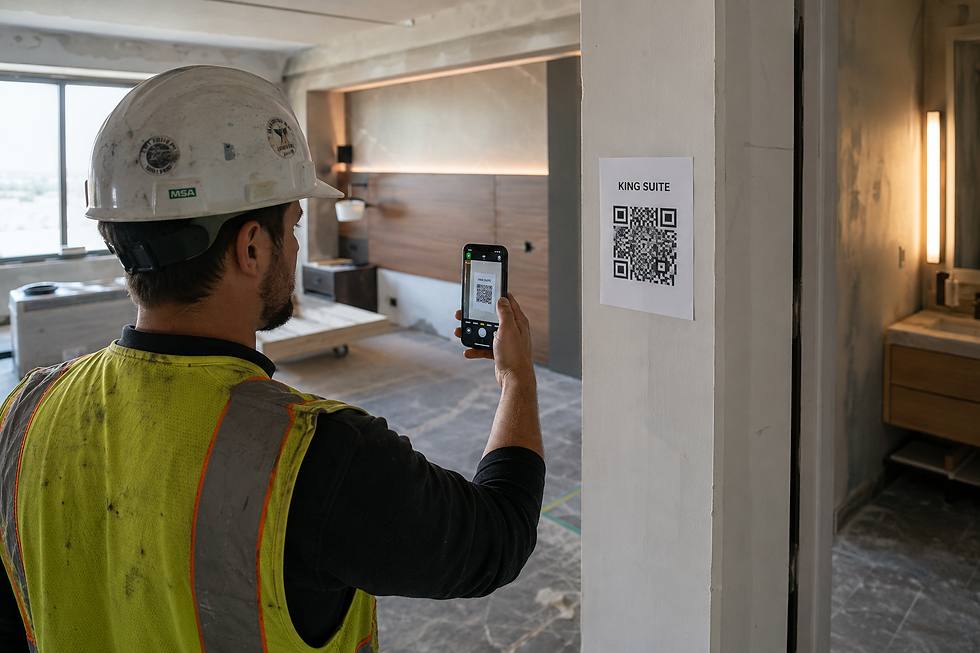
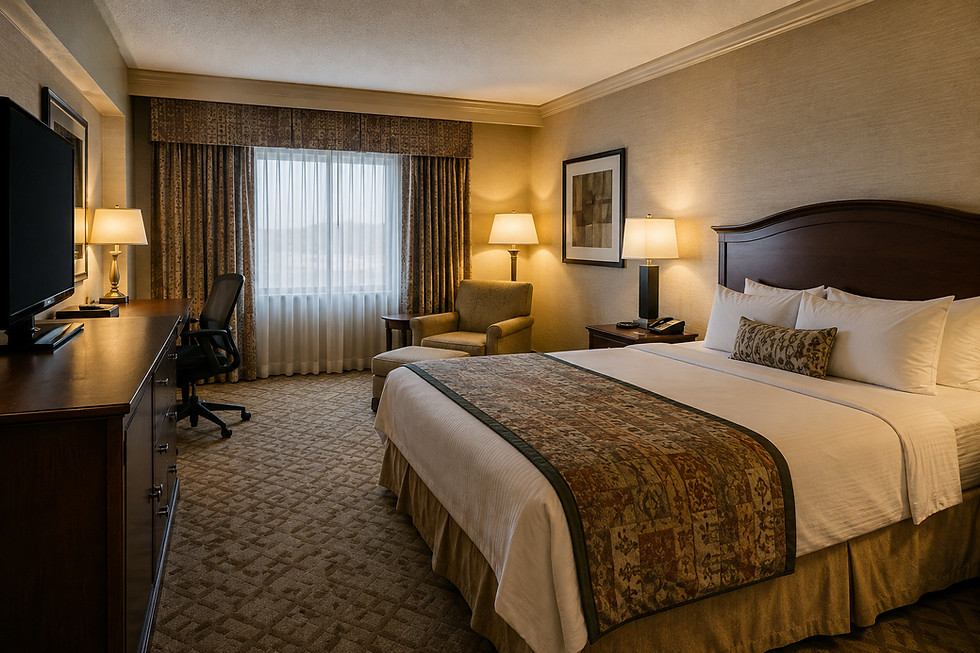
Conceptual imagery created for Designology Dispatch.