The Hotel Room Is a Product: Why Guestrooms Deserve a Strategic Approach

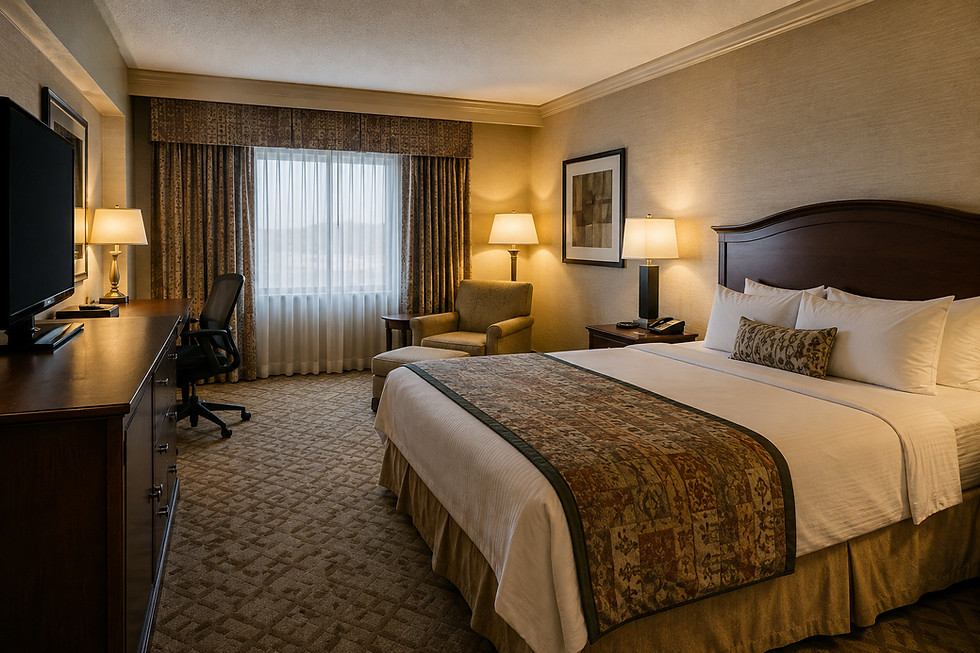
A hotel room is one of the most important products a hotel sells, and every detail inside it contributes to the value a guest perceives.
When a guest books a hotel, they are purchasing an experience. The room is a significant part of that experience, from the moment they see it online to the moment they check out.
The bed, lighting, layout, materials, furniture, bathroom, technology, views, and even the space between each element all contribute to how that experience feels.
That makes the guestroom worthy of more than a beautiful design concept. It deserves a strategic approach.
Start With the Guest
Before selecting finishes or furniture, understand who will be staying in the room.
A business traveler may need a functional workspace, convenient outlets, strong lighting, and somewhere comfortable to unwind at the end of the day. A leisure traveler may value storage, seating, natural light, and a sense of escape. A family has different needs again.
Understanding the guest helps determine where design decisions can have the greatest impact.

Every Square Foot Has a Job
Hotel guestrooms have to accomplish a lot within a limited footprint.
The room needs to provide somewhere to sleep, work, relax, get ready, store belongings, charge devices, and move comfortably through the space.
Good planning makes these functions feel intuitive.
Furniture placement affects circulation. Lighting affects how the room feels and how easily guests can use it. Storage affects whether the room feels organized or cluttered. Even the placement of a luggage bench or electrical outlet can influence the experience.
When every element has been considered, the room feels effortless.
Perceived Value Matters
Guests don't experience a hotel through a spreadsheet. They experience it through what they see, touch, hear, and use.
That experience influences whether the room feels worth the rate they paid.
Two hotels can offer rooms of a similar size while creating very different perceptions of value.
Material quality, detailing, lighting, comfort, and consistency all contribute to that perception.
This is where design can support the business strategy. When the physical product communicates quality and aligns with the hotel's positioning, it can help create a stronger relationship between the room and the rate.
Design for the Real World
A hotel room can look beautiful in a rendering and still create problems once it is in operation.
Hotel guestrooms experience constant use. Furniture is moved. Finishes are cleaned repeatedly. Fabrics encounter spills. Fixtures need maintenance. Housekeeping teams need to turn rooms efficiently.
Design decisions have to account for all of this.
The right material may not be the most delicate or visually impressive option. It may be the one that delivers the right balance of appearance, durability, maintenance, cost, and longevity.
The same thinking applies to furniture, lighting, hardware, flooring, millwork, and accessories.
A successful guestroom needs to perform long after the photography is finished.
The Guest Experience Starts Before Check-In
The room begins selling before a guest ever opens the door.
Photography, online listings, room descriptions, and booking platforms create the first impression.
This is why professional photography matters. The images need to communicate the experience accurately while presenting the space at its best.
When the guest arrives, there should be a connection between what they expected and what they experience.
That consistency builds trust.
Small Details Can Carry a Lot of Weight
Some of the most memorable parts of a hotel room may be surprisingly simple.
The warmth of the lighting.
A comfortable chair in exactly the right place.
A well-designed bedside table.
Convenient charging.
A bathroom that feels considered.
A place to put your suitcase.
A blackout curtain that actually works.
These details may seem small individually, but together they shape how a guest experiences the room.
Good design often comes down to understanding those moments.
Design for the Guest and the Operator
A hotel room has two very different audiences.
The guest experiences the room for a night, a weekend, or perhaps a few weeks.
The hotel team works with that room every day.
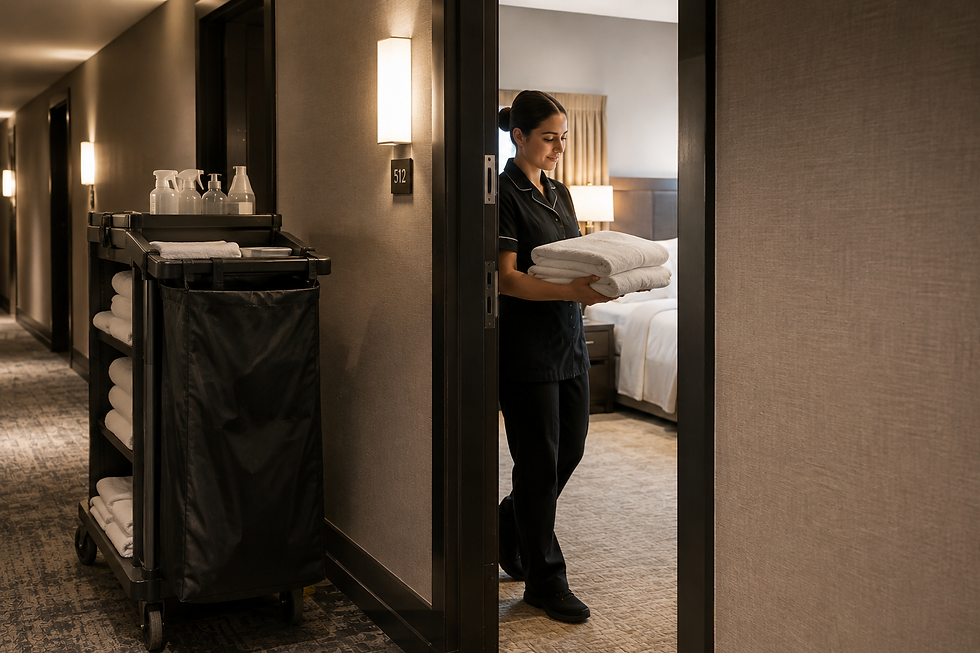
Housekeeping, maintenance, management, and operations all interact with the design in ways the guest may never see.
A successful guestroom has to support both sides.
That means considering everything from cleaning and durability to replacement cycles, accessibility, maintenance, and operational efficiency alongside aesthetics and guest experience.
The Room Is Part of the Business
A hotel room is where design, hospitality, operations, and business strategy meet.
It needs to feel good.
It needs to function well.
It needs to withstand use.
It needs to reflect the property's positioning.
And ultimately, it needs to deliver an experience that makes the guest feel that the room was worth what they paid for it.
When we treat the hotel room as a product, every design decision becomes an opportunity to add value.
The goal is a room that looks beautiful, feels intuitive, performs operationally, and supports the larger goals of the property.
That is where thoughtful hospitality design becomes more than aesthetics.
It becomes strategy.
Written by Jasmine Bentivoglio
Founder & Principal Designer, Designology
Conceptual Imagery created for Designology Dispatch