When Should You Hire a Hospitality Designer?

Why the right time to involve a designer is before major decisions become fixed.
Every hotel project is different.
A boutique hotel refresh will not follow the same path as a branded property completing a PIP. A restaurant redesign will move differently than a full guestroom renovation. A repositioning project will require a different level of strategy than a cosmetic update. Some properties have more flexibility, while others are working within brand standards, prototype requirements, ownership approvals, budget cycles, or strict deadlines.
There is no single timeline that applies to every hotel or hospitality space.
But there is one principle that applies to almost all of them: the designer should be involved before the project is already locked into decisions that design can no longer properly influence.
Too often, design is treated as the stage that happens once the project is ready to move. The scope is already set, the contractor is waiting, the schedule is tight, and construction is expected to begin soon. At that point, the designer is asked to make thoughtful decisions quickly, often within constraints that were created before they entered the conversation.
That does not serve the project well.
Design needs time to understand the property, the guest, the operation, the budget, and the opportunity. It is an investment, and like any investment, it works best when it is approached with clarity rather than urgency.

Design Should Start Before Construction Is Ready to Begin
If construction is about to start, many important decisions have already been made.
The layout may be established. The budget may be allocated. The timeline may be compressed. Trades may already be scheduled. Materials may be expected sooner than they can realistically be selected, documented, priced, approved, and ordered.
This is where projects become difficult.
When design is brought in too late, the process becomes reactive. The focus shifts from developing the right direction to solving immediate problems. Decisions are made because they are available, fast, or easy to approve, rather than because they are the strongest fit for the property.
A hospitality interior designer should be involved while there is still room to think.
That does not always mean years in advance. It means early enough to help shape the scope, identify priorities, review constraints, and create a direction that supports both the guest experience and the operation of the hotel.
The earlier design is part of the conversation, the more value it can bring.
If There Is a PIP, Do Not Wait Until the Deadline Is Close
For branded hotels, a Property Improvement Plan can add another layer of structure.
A PIP may outline required updates, brand expectations, timelines, finishes, guestrooms, public areas, signage, amenities, or operational improvements. In some cases, the process is highly structured. In others, there may be room to interpret the requirements in a way that feels more intentional for the property.
Either way, a PIP should not be treated as something to start at the last minute.
Deadlines create pressure, and pressure rarely creates better design. When a hotel waits too long, the project can become a race to comply rather than an opportunity to improve. Decisions become rushed, coordination becomes more difficult, and the final result may meet the requirement without fully supporting the long-term value of the property.
A PIP can be more than a checklist.
It can be an opportunity to improve the guest experience, strengthen photography, support rate confidence, update tired spaces, and make the hotel feel more aligned with where the brand and market are moving.
That requires time.
It also requires the right team to be involved early enough to review what is required, what is flexible, what should be prioritized, and how the investment can work harder for the property.

Design Is More Than Selections
One reason designers are brought in too late is because design is often misunderstood as the final layer.
Paint colors. Furniture. Fabrics. Lighting. Artwork. Accessories.
Those elements matter, but they are only part of the work.
In hospitality, design is also about how the property functions. It considers how guests arrive, where they pause, how they move through the lobby, how staff serve them, how rooms are cleaned, how materials wear, how lighting affects mood, how a space photographs, and how the property is remembered after checkout.
By the time finishes are being selected, many of the most important design questions should already have been asked.
What is the goal of the project?
Who is the guest?
What is currently causing friction?
What needs to feel more elevated, more efficient, or more memorable?
Where is the property losing value through outdated spaces, poor flow, weak atmosphere, or unclear identity?
What decisions will matter most five years from now?
A designer can help answer these questions, but only if they are invited into the process early enough.
Early Design Input Can Protect the Budget
Involving a designer early does not mean spending more without reason. In many cases, it can help protect the budget by creating clearer priorities.
Without design strategy, money can be spent in places that do not meaningfully change the guest experience. A hotel may replace furniture when the lighting is the larger issue. It may update finishes when the layout is causing the frustration. It may invest in a lobby refresh when the guestrooms are the reason guests hesitate to return.
Early design input helps separate what is urgent from what is valuable.
It can also reduce costly changes later. When decisions are rushed, details are often missed. Materials may be selected before lead times are confirmed. Furniture may be ordered before the layout is fully resolved. Construction may begin before the design has been coordinated properly.
Those issues can create delays, substitutions, change orders, and compromises.
Good design takes time, but rushed design often costs more than people expect.
When to Bring in the Designer
The right timing depends on the type of project.
For a light refresh, a designer should be involved before furniture, lighting, paint, finishes, artwork, or soft goods are purchased. Even small updates benefit from a clear direction, especially in hospitality where every selection needs to support durability, maintenance, guest perception, and brand alignment.
For a renovation, the designer should be involved before layouts, budgets, and construction schedules are finalized. This allows the design team to review how the space is functioning, where the guest experience can improve, and what needs to be coordinated before work begins.
For a branded hotel working through a PIP, the designer should be involved as soon as the requirements are understood. This gives the team time to review the scope, identify opportunities, coordinate with brand expectations, and avoid turning the project into a last-minute rush.
For a repositioning, the designer should be involved at the very beginning. Repositioning is about more than updating the space. It involves understanding the property’s identity, guest profile, competitive set, sense of place, and long-term direction. The interiors should help shape that story, not simply respond to it after the fact.
Every project has its own pace, but the best results usually come when design has time to inform the path forward.
Time Creates Better Decisions
Hospitality design requires more than a quick vision.
It takes time to observe the property, understand the goals, develop a concept, review existing conditions, coordinate drawings, select materials, source furniture, consider lead times, price options, make revisions, prepare documentation, and align decisions with the project budget and schedule.
That time is not wasted. It is where the quality of the project is built.
A rushed process can still produce a finished space, but it often leaves less room for refinement. Less room to compare options. Less room to solve problems before they become expensive. Less room to consider the guest, the staff, the brand, and the long-term performance of the property.
Design does not need endless time. It needs appropriate time.
The right amount of time allows decisions to be made with purpose, and that is what creates a stronger result.

The Best Time Is Earlier Than Most People Think
A hospitality designer should be brought in when the project is still open enough to benefit from design thinking.
Before construction is about to begin. Before every major decision has already been made. Before the budget is fully committed to the wrong priorities. Before a PIP deadline becomes urgent. Before the project becomes a series of fast decisions instead of a thoughtful investment.
This does not mean every hotel needs a long design process. It means every hotel benefits from clarity before action.
A strong designer can help determine what the property truly needs, where the investment will have the most impact, and how the design can support both the guest experience and the operation of the hotel.
The goal is not to slow the project down.
The goal is to help it move forward with more intention.
Because by the time construction is ready to start, design should not be scrambling to catch up. It should already be guiding the decisions that make the project stronger.
Written by Jasmine Bentivoglio
Founder & Principal Designer, Designology
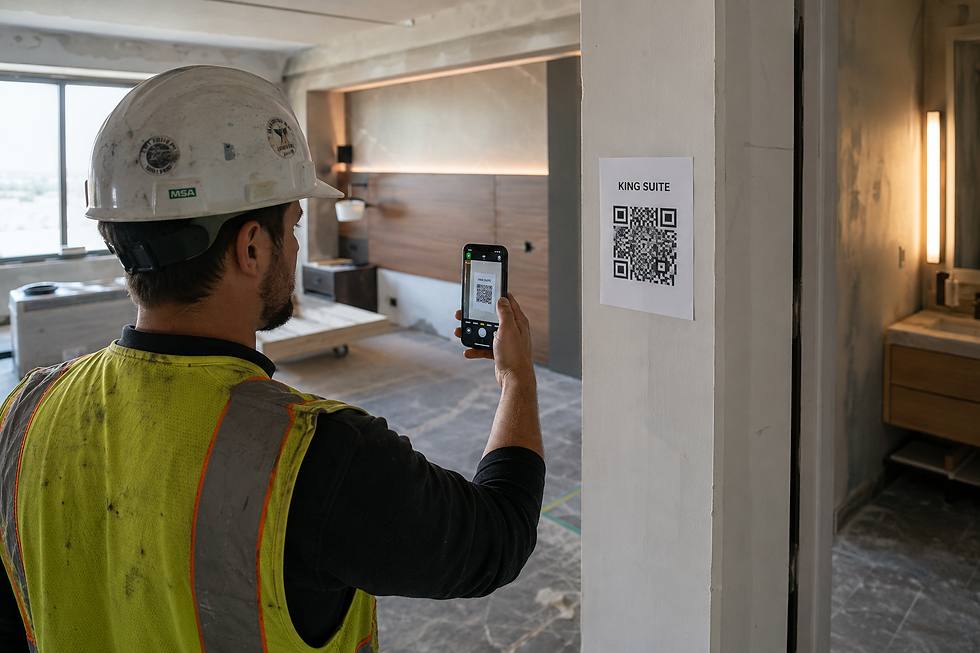
Conceptual imagery created for Designology Dispatch.
Final Image by Caught by Brisco Photography.